OCTOPUS

Five boxes. Seven modes. Too many shapes.

Stop memorising boxes. Know what you're playing.

Most of us learned the guitar by memorising boxes, and forgot them a month later. Octopus teaches the neck the other way round: every note tells you what it is, 1, b3, 5, b7, so you always know where you are and why it sounds the way it does. Music first. Shapes never.
Open the app Free · in your browser · no account How it works →
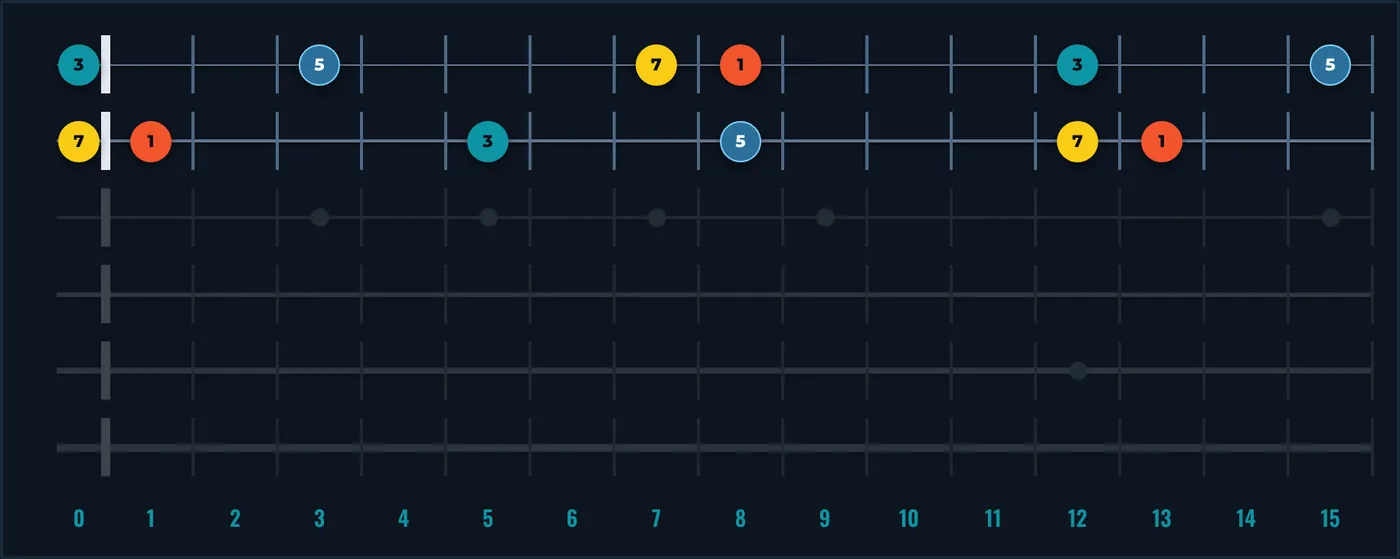
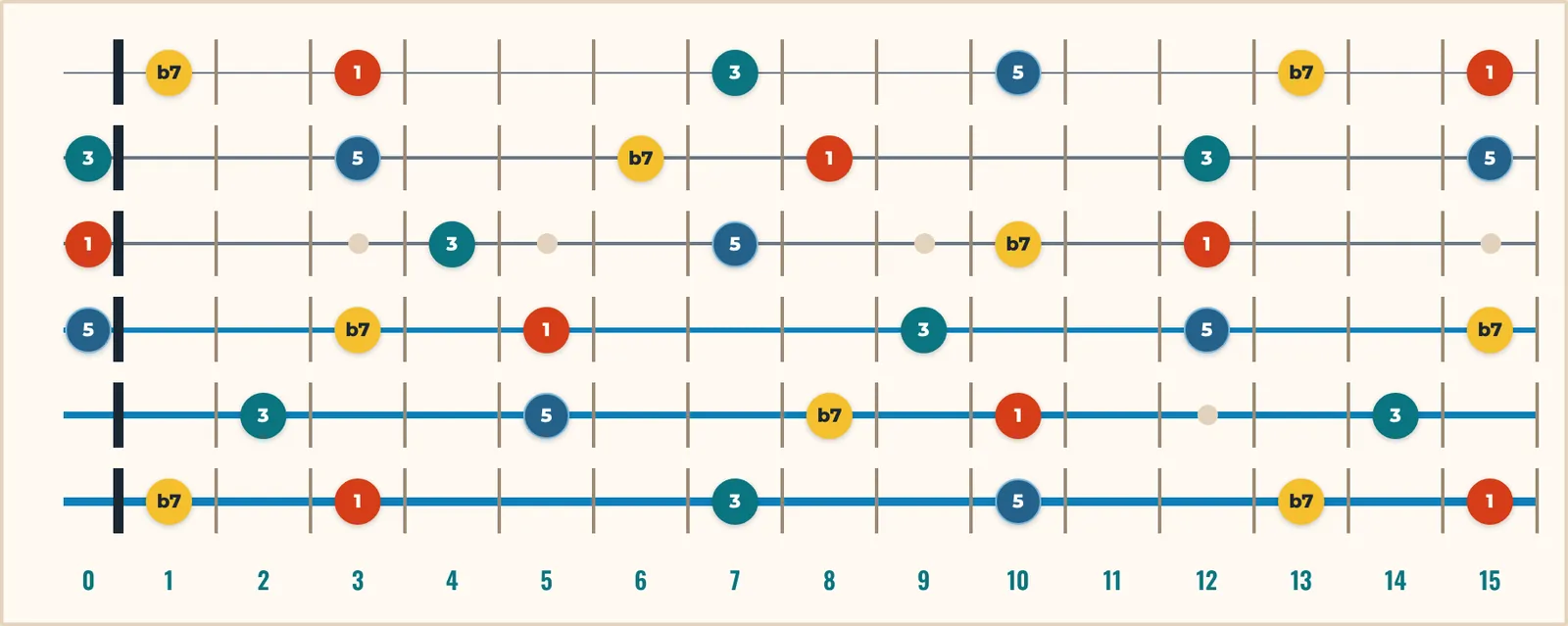
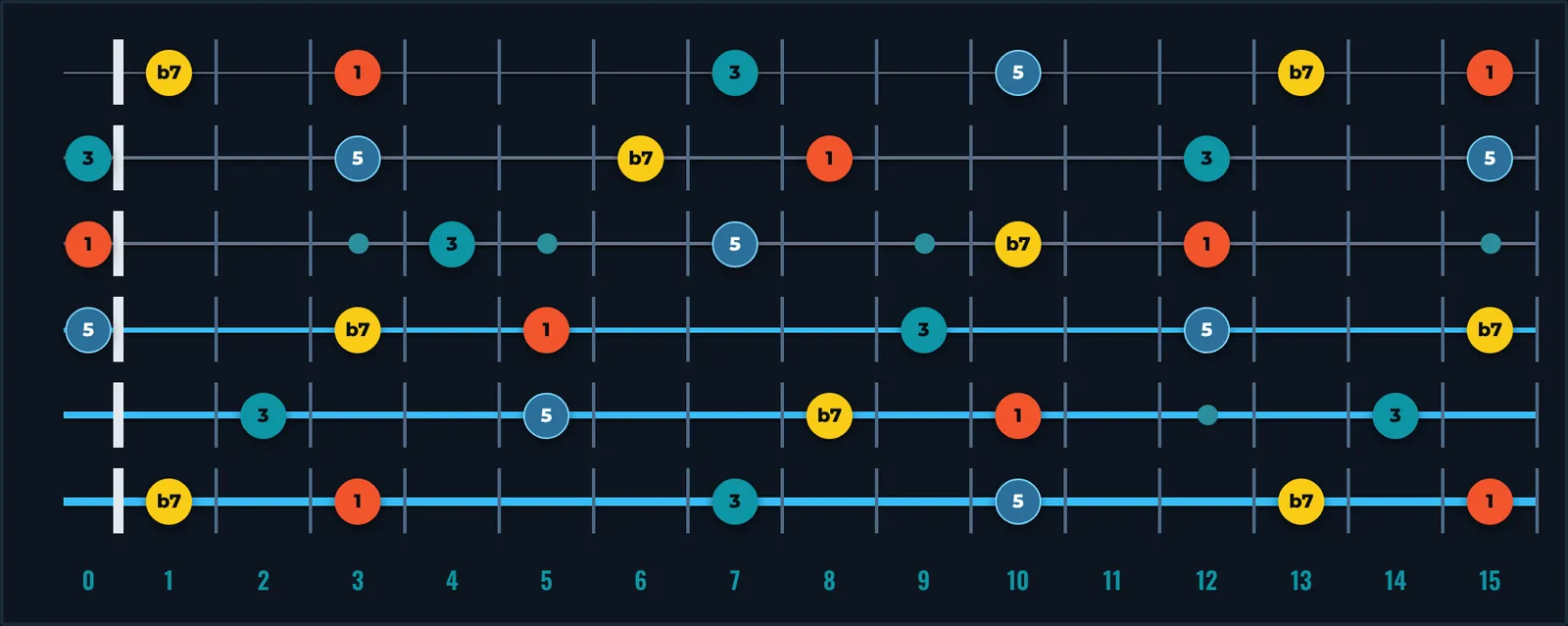
The Octopus neck showing G7 on every fret, each note labelled 1, 3, 5 or b7 The Octopus neck showing G7 on every fret, each note labelled 1, 3, 5 or b7
G7, frets 0–15. No shape to remember: 1, 3, 5 and b7, wherever they fall.

A different way to learn

Know the music. The neck follows.

A box is a picture of dots. It works until you step out of it, and it fades as soon as you stop drilling it. An interval is a fact: the b7 of G is F on every string, in every position, in every song. Learn twelve of them once and every scale and chord is made of things you already know.

1

Know where you are

Every note is named by its job over the root. You never play a dot: you play a third, a fifth, a seventh, and you hear why.

2

Understand before you memorise

Scales and chords are built from intervals, so each one explains itself: Dorian is minor with a 6, Mixolydian is major with a b7. It is how music works before it is how a guitar works, and we think it is the right way to learn both.

3

Practise until it sticks

Four short exercises turn understanding into reflex: find every b7, build a chord in a zone, name a degree by ear, read a key signature.

BoxesOctopus
What you learnFive shapes for every scaleTwelve intervals, once
Outside the boxLostYou still know where you are
A new scaleA new shape to drillA new set of degrees you already know
A month offGoneStill true

How it reads

Every note tells you what it is.

Colour shows the job a note does in the chord, not its pitch. After a week you read the neck by colour: chord tones solid and loud, tensions outlined and quiet.

1
RootHome. Everything is measured from here.
b33
ThirdMajor or minor. The chord's quality.
b55
FifthStructure. The ring keeps it apart from the third.
b77
SeventhThe note that makes it a seventh chord.
91113
TensionsColour on top. Outlined, never louder than the chord.

Six of my arms are guitar strings. Not one of them memorises boxes.

Only the two highest strings lit, with Cmaj7: the 3rds and 7ths line up end to end
Cmaj7 on e and B. Thirds and sevenths, end to end.

String sets

Study the neck sideways.

Keep only two or three strings and follow a chord along the whole neck. On a pair you see how the 3 and the 7 move from one string to the next; on three strings you start hearing triads. The arrows slide the set one string at a time.

Open this in the app →
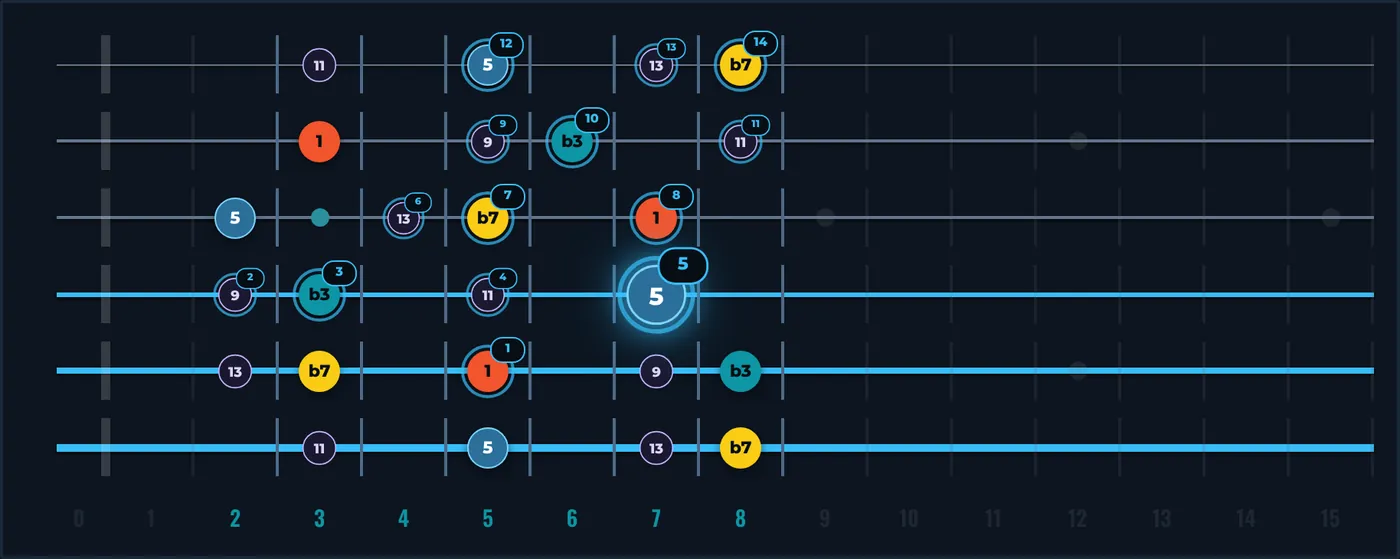
D Dorian over two neighbouring zones, mid-playback: numbered notes trace a diagonal line up the neck
D Dorian, two zones, playing. Each note lights up as it sounds.

Zones, not boxes

Play across the neck, not inside a box.

Pick a four or five fret area, or several, and play through them one at a time or on a diagonal. Every run starts and ends on the root. The neck shows the note that is sounding, the ones already played and their order, at any tempo, with real guitar samples, a click and a drone.

Open this in the app →
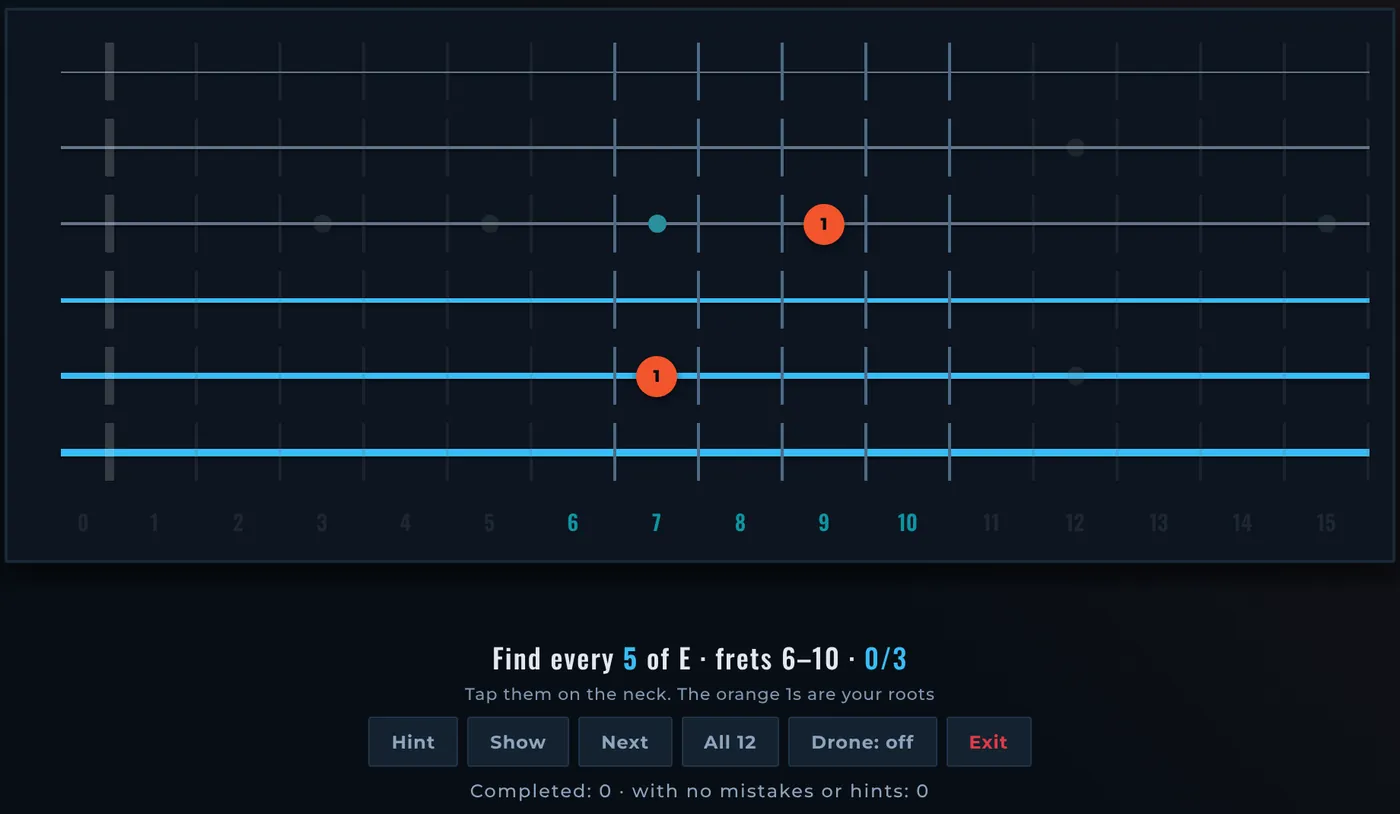
Find it: the roots are lit in orange and the question asks for every place of one degree inside a zone
Find it. From the roots, find every position of a degree.

Practice

Then put the book away.

Understanding is half of it. Four exercises fix it in your hands, a few minutes at a time. Each one names the musical fact when you get it wrong, so you learn the interval, not the dot.

  • BuildA chord or a scale and a zone. The roots are lit: tap every other note.
  • Find itFrom the roots, find every 3, every b7, every 9 in the zone.
  • Ear trainingHear a note, find its degree on the neck. Root or drone when you want it.
  • KeysKey signatures: which notes a key alters, which key the sharps belong to, its relative minor.
  • And StudyNot an exercise: a clean, full-width neck with a tempo bar, for playing along.

I don't do shapes. I do intervals.

On the phone

Five frets in portrait. The whole neck in landscape.

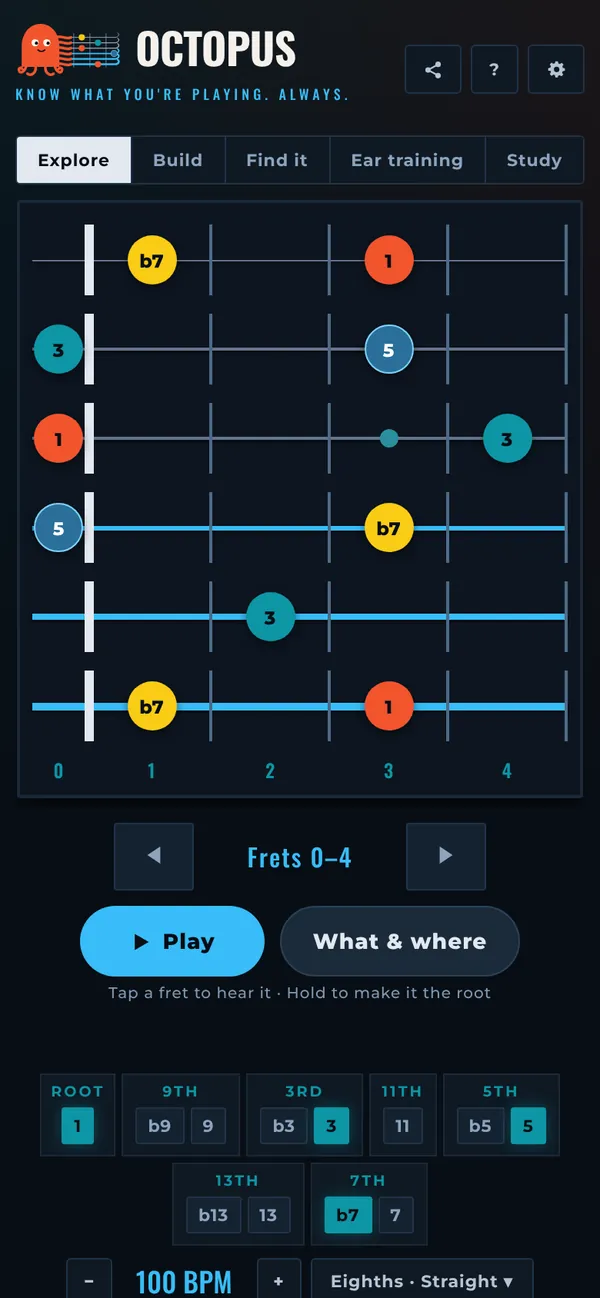
On a phone held upright Octopus shows five frets with big notes to tap; swipe the neck to move along it, and Play plays the frets you are looking at. Turn it sideways, or open it on an iPad, and you get the whole fretboard. Key, scale and tempo open over the app, out of the way. Left-handed players get a mirrored neck with one switch.

Add it to your home screen and it opens full screen and works offline: no store, no account.

Share a link and the other person opens exactly your neck: key, scale or chord, zones and strings. Made for teachers and their students.

Octopus on a phone in portrait: G7 in a five fret window with Play and What & where buttons

Know what you're playing. Always.

Open the app Free · in your browser · no account